1. Track System Design
Track Shoe Width:
Wetland bulldozers feature significantly wider track shoes, typically 950mm or 1100mm, compared to standard crawler bulldozers (510mm–660mm). The wider tracks reduce ground pressure , preventing sinking in soft wetlands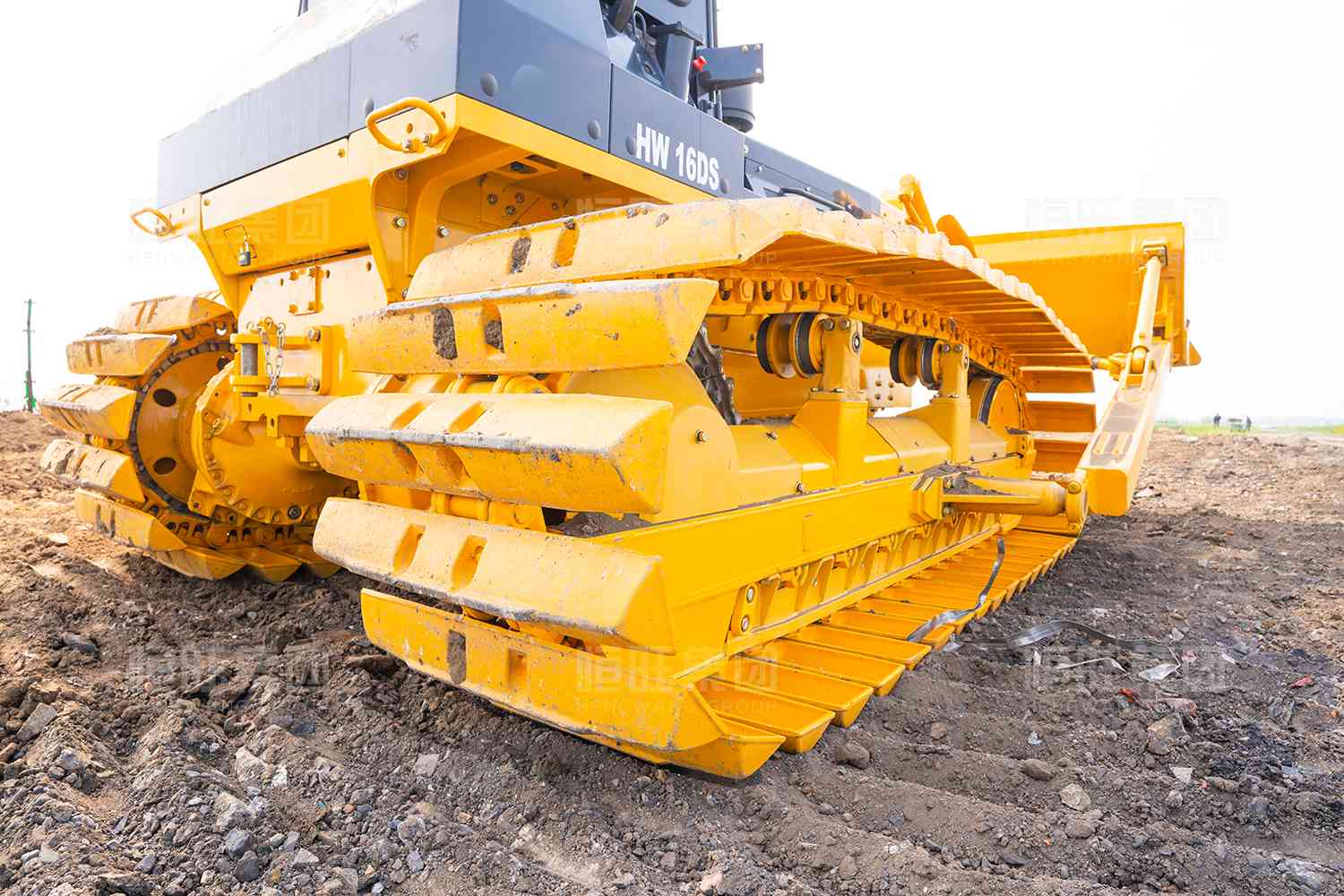
Track Structure:
Wetland bulldozers use triangular or arc-shaped track shoes to prevent soil from turning into mud and improve traction by expelling water. Standard crawler tracks are often flat or straightAnti-Slip Design:
Some wetland models incorporate anti-slip plates or sealed bearings on the track drive system to resist mud ingress and enhance grip
2. Chassis and Structural Reinforcement
Ground Clearance:
Wetland bulldozers have higher ground clearance to avoid water or debris accumulation around critical componentsReinforced Chassis:
Built with large-module gears and heavy-duty load-bearing designs, they withstand impacts and vibrations in harsh wetland conditionsWaterproof Electrical Systems:
Electrical components are sealed or treated for waterproofing to ensure functionality during waterlogged operations
3. Power and Performance Adaptations
Engine Compatibility:
Wetland models may use engines optimized for low-temperature starts to handle humid environmentsCooling Systems:
Enhanced cooling systems mitigate overheating risks in high-humidity settingsTraction Optimization:
Torque converters and hydrodynamic transmissions ensure efficient power distribution for traction in soft soils
4. Application Scenarios and Efficiency
Wetland Bulldozers:
Designed for swamps, marshes, and high-moisture terrains, they excel in tasks like pushing, leveling, and excavation in environments inaccessible to standard machines. Commonly used in waste treatment plants, water conservancy projects, and ecological restorationStandard Crawler Bulldozers:
Suitable for dry or mildly moist soils (e.g., construction sites, agricultural fields) with moderate traction requirements
5. Maintenance and Cost
Maintenance Complexity:
Wetland bulldozers require specialized tools for track shoe replacement and more frequent inspections of waterproof seals and corrosion-prone partsHigher Initial Cost:
Wetland models are pricier due to specialized components
Summary
Wetland bulldozers prioritize amphibious capabilities and stability in soft terrains through wider tracks, structural reinforcement, and waterproofing. However, they sacrifice maneuverability and cost-effectiveness compared to standard crawler bulldozers, which remain preferable for routine earthmoving tasks. The choice depends on operational environment demands: wetland models are essential for flooded or muddy sites, while standard variants suffice for general-purpose projects.